
I recently received sourdough starter from a local gal and found myself inundated by recipes until I got so confused and frustrated. My first batch was overproofed and dense.
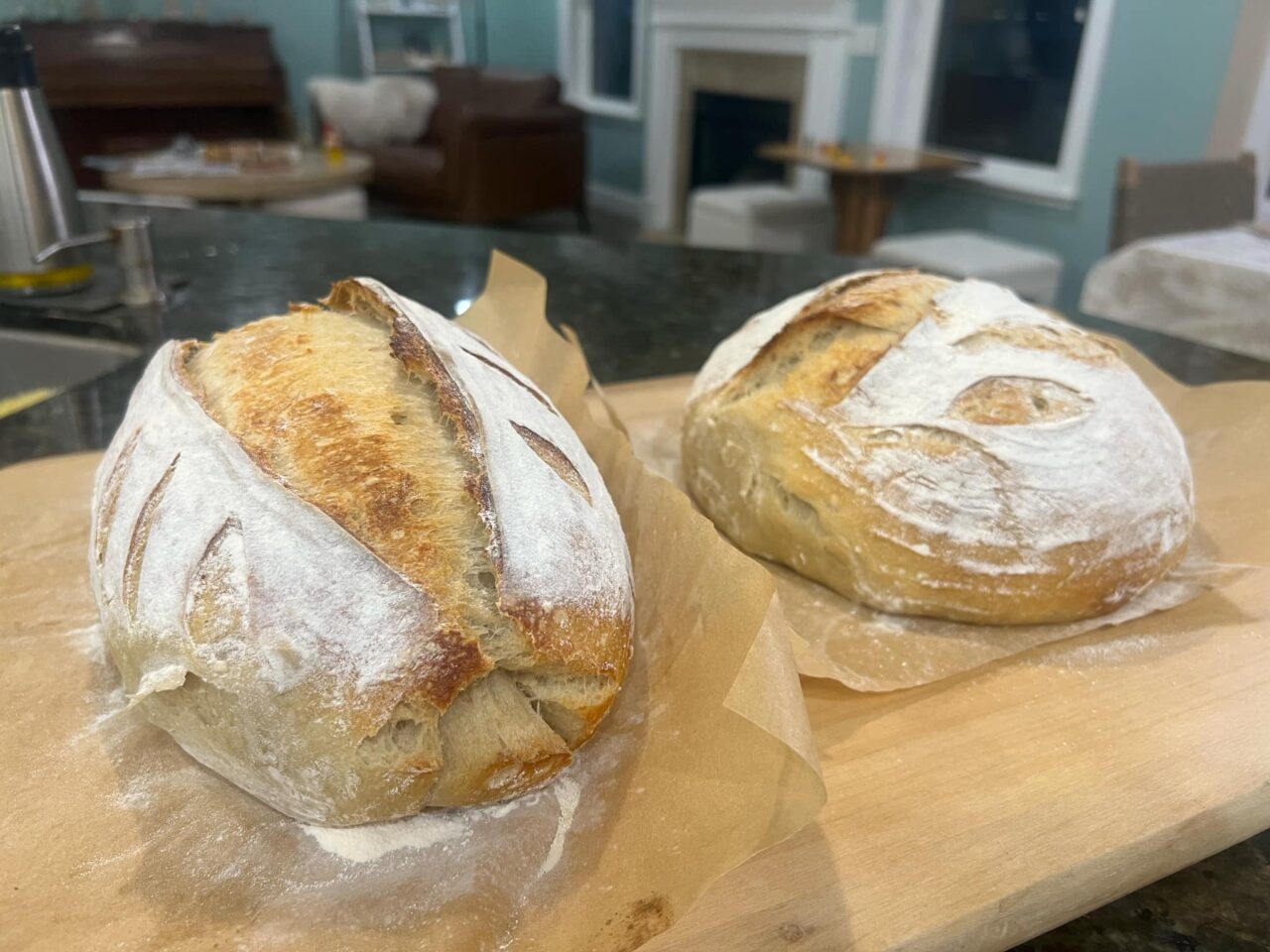
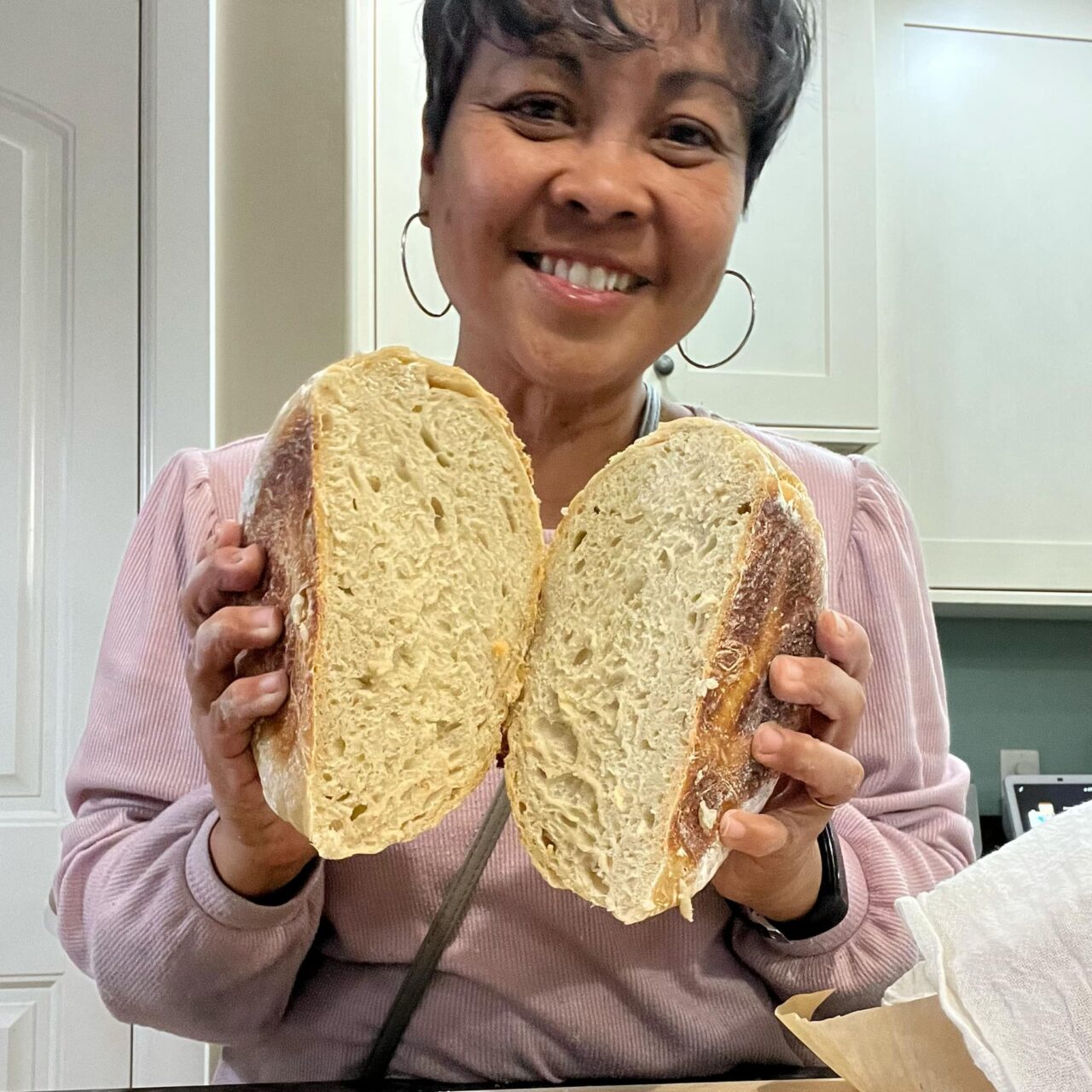
Today, I modified Sourdough Mom’s 8-Hour Sourdough Recipe and adapted it for a roasting pan (instead of a Dutch Oven, which I find super heavy and bows my oven rack). I liked this recipe because it is relatively quick. It only took feeding the starter overnight, and then baking the sourdough in time for dinner the next day. I made one oval and one round loaf, which turned out fantastic.
NOTE: The room where I put my dough in to rise, my sunroom, was very warm today, 73°F, so it was the optimum temperature for a quick-rise. It might take longer if your space is colder.
Equipment: Large mixing bowl, Kitchen scale, Bench scraper, Clean kitchen towel, 12″ x 16″ (or similar size) Turkey roasting pan, Parchment paper, Scoring lame. 2 Banneton bowls (oval or round). (I ordered a banneton bowl kit from Amazon.)
Ingredients:
250 g active sourdough starter
725 g filtered water, warmed
1000 g unbleached bread flour
25 g salt
Directions:
Activate sourdough starter (the night before):
- Take out sourdough starter, measure 250 g and feed (add 10 Tbsp filtered water and 6 Tbsp g unbleached bread flour) in a small bowl. Loosely cover with flour sack or dish cloth and leave on counter overnight (or 12 hours before mixing the dough). It is ready when bubbly and double in height.
Prepare Dough:
- The next morning when starter is activated, measure out 250 g into a large bowl. Save or throw away the discard.
- Zero out the scale and add 725 g of warm filtered water. Mix until starter is dissolved.
- Gradually add 1000 g of flour and 25 g of salt, hydrating the mixture as evenly as possible. Mix by hand until the dough has a shaggy texture and there are no pockets of dry flour remaining.
Stretch and Fold:
- Cover the dough with a flour sack or dish towel and let rest for one hour.
- Perform stretch and folds every 30 minutes for four rounds.
Bulk Fermentation:
- After the fourth round, cover the dough with towel and bulk ferment on the counter for two hours until it doubles in size. (This may take longer than 2 hours depending on temperature in your kitchen.)
Shaping:
- Lightly flour the counter or large cutting board. Split the dough in half.
- Shape each dough ball into a large rectangle, then fold one side toward the middle, and repeat with the other side. Roll up your dough into a ball. Push your dough out in a circular motion then pull in about 3-4 times (tucking in the underside). Let rest for 20 minutes.
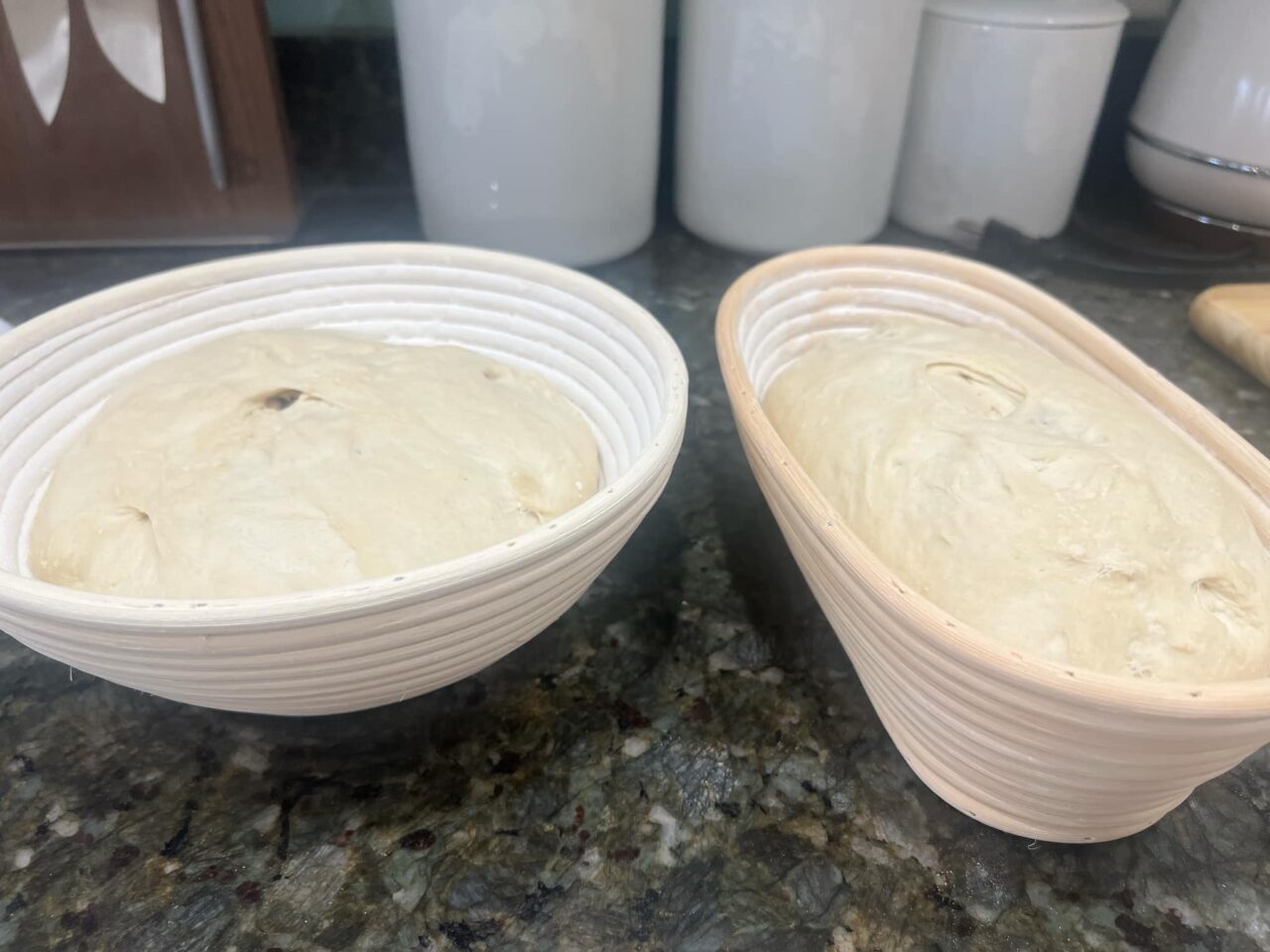
- Repeat previous step for a final shaping. Place each dough ball upside down (seam side up) into a separate banneton dusted with rice flour.
Proofing:
- Cover dough with a flour sack / kitchen towel / clean shower cap / plastic wrap and place (cold-proof) in the fridge for 2 hours or up to 48 hours.
Baking:
- Position oven racks on center and bottom. Preheat the oven to 450°F. Set an empty cookie sheet on the bottom rack to prevent the bottom of the dough from burning.
- Flip each dough onto parchment paper. Score the dough.
- Lift each dough by the parchment paper and set into the roasting pan (I was able to fit an oval and a round sourdough into my turkey roasting pan.)
- Toss in a few ice cubes into pan (to create better steam and rise) and bake uncovered at 450°F for 20 minutes, then uncover and bake for 20-30 minutes at 425°F or until internal temperature reaches 203-210°F and crust is golden / brown to your liking.
- Remove from oven and transfer onto a rack or cutting board, cooling for at least an hour before slicing.
Storage:
- Cool completely (3-4 hours) entire loaf or sliced (with parchment between to keep from sticking), wrap in plastic wrap, then freeze in airtight zip-top bag / container.
- To serve, thaw at room temperature for several hours. Refresh the crust by baking thawed loaf at 300°F for 20-25 minutes.
 Follow